After talking in class with a few students about how a layer of zombies can be added to just about anything, I ran across this mock trailer for a "Star Wars" version of that:
Monday, October 12, 2009

Sunday, October 11, 2009
"Springtime for Hitler"
Another remediation example relating to Nazis; see visual references to "Triumph of the Will" (as well as Busby Berkeley). ... From Mel Brooks' "The Producers." The two main characters in this piece try to oversell shares in a Broadway musical as part of a scam. The show is supposed to be so bad that it will close immediately, and the guys can skip town with the investors' money. But they need a piece that absolutely will flop. They think they find the perfect script: "Springtime for Hitler."
Thursday, October 8, 2009
"Downfall" parody
This clip from the film "Downfall" has generated many remediated parodies on a variety of topics, including the Apple Cup in 2008, right after the Cougs surprise victory (which made them only the second worst team in college football history); if you are a Cougar football fan, I think you'll find this to be quite clever:
Wednesday, October 7, 2009
Digital Media Sandbox Consortium contest
At the end of this month, our class could collaborate again with the folks at Digital Media Sandbox Consortium (based at Tennessee State University in Nashville).
A group of colleges, predominately on the East Coast and in the South (WSU Vancouver has the honor of being the first Northwest college to join into the mix) will participate in its annual podcasting competition, which offers prize packages of up to $500 in cash as well as "gear."
Our audio stories could fit perfectly in the category of "creative feature," but those aiming for that distinction will need to keep in mind the theme this year, "distraction" as well as the submission guidelines (such as maximum length of 10 minutes).
A full set of contest rules and criteria can be found here.
Here are the winners from last year, to compare techniques and quality level.
A group of colleges, predominately on the East Coast and in the South (WSU Vancouver has the honor of being the first Northwest college to join into the mix) will participate in its annual podcasting competition, which offers prize packages of up to $500 in cash as well as "gear."
Our audio stories could fit perfectly in the category of "creative feature," but those aiming for that distinction will need to keep in mind the theme this year, "distraction" as well as the submission guidelines (such as maximum length of 10 minutes).
A full set of contest rules and criteria can be found here.
Here are the winners from last year, to compare techniques and quality level.
Tuesday, October 6, 2009
David Sedaris on language and symbols
This David Sedaris audio excerpt, from a piece called "Six to Eight Black Men," provokes thoughts about language, stereotypes, foreigners, small talk, onomatopoeia and traditions, including the stories we pass down from generation to generation. And it is really funny.
Examples of audio theater
Here are a few great resources to hear high-quality radio theater:
L.A. Theatre Works (we are going to hear this group's Pygmalion on Wednesday night)
The Mercury Theatre (Orson Welles's troupe, which created the infamous "War of the Worlds" broadcast
And a big list of all sorts of radio theater on the Web
L.A. Theatre Works (we are going to hear this group's Pygmalion on Wednesday night)
The Mercury Theatre (Orson Welles's troupe, which created the infamous "War of the Worlds" broadcast
And a big list of all sorts of radio theater on the Web
Friday, October 2, 2009
Another extra credit opportunity
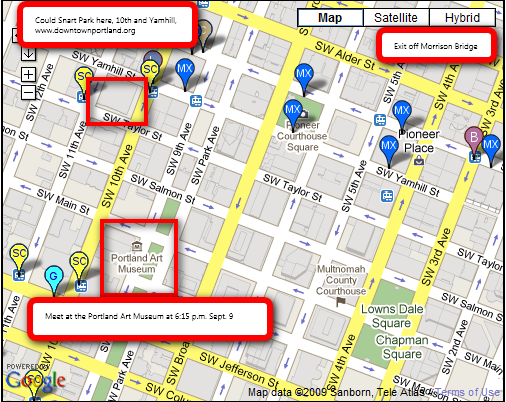
The Portland Art Museum is presenting a show right now that I think offers interesting insights into our class:
"Word and Image/Word as Image
AUG 22, 2009 – NOV 29, 2009
Featuring works by artists from Albrecht Dürer to Ed Ruscha, this exhibition examines the relationship between word and image in prints over the course of more than 500 years, from the Renaissance to today. Comprising nearly 70 works, the exhibition is assembled from the permanent collection of the Portland Art Museum and local private collections.
The exhibition focuses on four groups of works, beginning with late 15th- and 16th-century prints, which tend to convey clear messages with a close correlation of text and image. This section includes a page from the renowned Nuremberg Chronicle, the most lavishly illustrated book of the late 15th century.
Prints of the 17th and 18th centuries often present ambiguous messages, particularly in commentaries about society, as in works by by Francisco de Goya and Cornelis Dusart.
With the emergence of Pop art in the mid 20th century, prints drew from everyday subject matter, common objects, and consumer culture, as in Andy Warhol’s large-scale renditions of S&H Green Stamps, Robert Rosenquist’s layered corporate logos, and Roy Lichtenstein’s comic-book style portrayals of melodramatic or violent subjects.
From the late 20th century to the present, artists have explored language as a subject, used text in conceptual or paradoxical ways, and explored social concerns. In Ed Ruscha’s Drops, from 1971, the letters in the word ‘drops’ are formed illusionistically with drops of water. Bruce Nauman’s Eat Death, a lithograph of 1973, evokes disturbing associations, and Edgar Heap of Birds’ 2006 monotype series addresses issues relating to indigenous peoples of North America.
Other artists represented in the exhibition include Odilon Redon, Käthe Kollwitz, Georges Braque, Claes Oldenburg, Robert Rauschenberg, and Jenny Holzer."
If you attend this exhibit, and then write a thoughtful piece of discourse about it and its relationship to themes we have discussed in class (500 words minimum, posted to the Google group), I will award you 10 extra credit points.
- Prof Brett
"Word and Image/Word as Image
AUG 22, 2009 – NOV 29, 2009
Featuring works by artists from Albrecht Dürer to Ed Ruscha, this exhibition examines the relationship between word and image in prints over the course of more than 500 years, from the Renaissance to today. Comprising nearly 70 works, the exhibition is assembled from the permanent collection of the Portland Art Museum and local private collections.
The exhibition focuses on four groups of works, beginning with late 15th- and 16th-century prints, which tend to convey clear messages with a close correlation of text and image. This section includes a page from the renowned Nuremberg Chronicle, the most lavishly illustrated book of the late 15th century.
Prints of the 17th and 18th centuries often present ambiguous messages, particularly in commentaries about society, as in works by by Francisco de Goya and Cornelis Dusart.
With the emergence of Pop art in the mid 20th century, prints drew from everyday subject matter, common objects, and consumer culture, as in Andy Warhol’s large-scale renditions of S&H Green Stamps, Robert Rosenquist’s layered corporate logos, and Roy Lichtenstein’s comic-book style portrayals of melodramatic or violent subjects.
From the late 20th century to the present, artists have explored language as a subject, used text in conceptual or paradoxical ways, and explored social concerns. In Ed Ruscha’s Drops, from 1971, the letters in the word ‘drops’ are formed illusionistically with drops of water. Bruce Nauman’s Eat Death, a lithograph of 1973, evokes disturbing associations, and Edgar Heap of Birds’ 2006 monotype series addresses issues relating to indigenous peoples of North America.
Other artists represented in the exhibition include Odilon Redon, Käthe Kollwitz, Georges Braque, Claes Oldenburg, Robert Rauschenberg, and Jenny Holzer."
If you attend this exhibit, and then write a thoughtful piece of discourse about it and its relationship to themes we have discussed in class (500 words minimum, posted to the Google group), I will award you 10 extra credit points.
- Prof Brett
Subscribe to:
Posts (Atom)